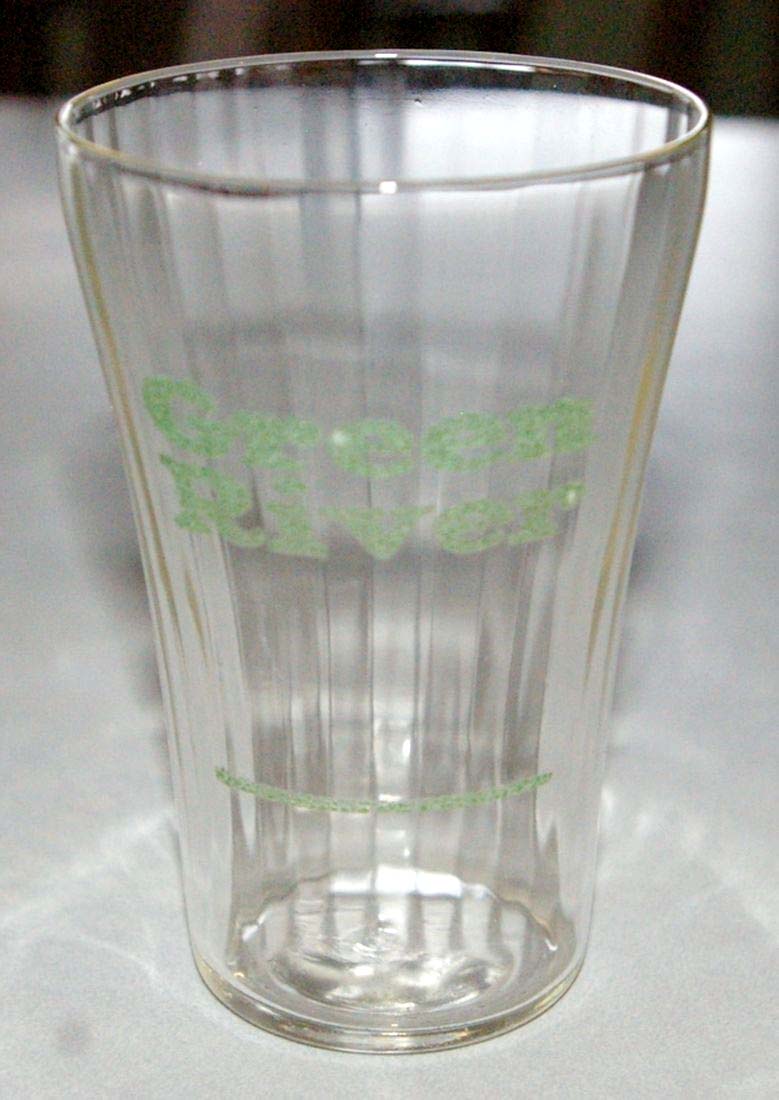
| Green River Syrup Line Glass – Fluted | |||
|---|---|---|---|
| Circa | Size | Value | Origin |
| 1920's | 3 7/8" | $50.00 | Schoenhofen Brewing Co. Chicago, IL |
Schoenhofen Brewing Co.
Chicago, IL
This soda was made by the Schoenhofen Brewing Co. of Chicago, IL during prohibition then sold off after beer came back. It was then made by the Green River Co.
Green River soda was introduced to Midwestern drinkers in 1919, just as Congress was passing the 18th Amendment establishing Prohibition. When Prohibition officially went into affect on January 16, 1920, some breweries turned to making a nonalcoholic drink call Near Beer, while others were churning out ice cream. The Schoenhofen Edelweiss Brewing Company of Chicago turned to Green River. The soda was poured into old beer bottles and sold in the market. It was an immediate hit. The soft drink was so popular that Al Jolson recorded a song written about Green River.
Another like this glass is found in Petretti's Collectibles Guide on page 205. A later version of the glass is here.
For a drink that's fine without a kick,
Try Green River,
It's the only soft drink you should pick,
Try Green River.
Schoenhofen
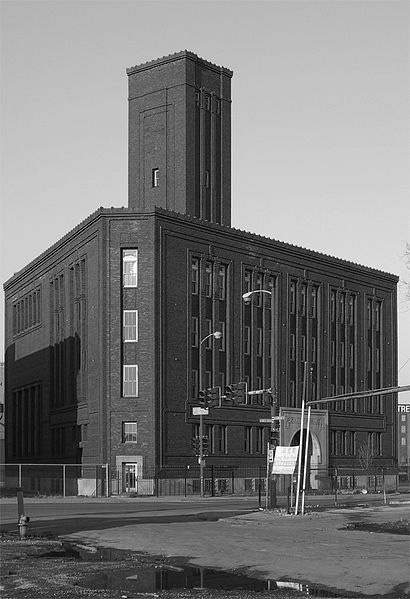
The Schoenhofen Brewery Historic District is centered around the former site of the Peter Schoenhofen Brewing Company at 18th and Canalport Avenue in the Pilsen neighborhood of Chicago, Illinois.
Beginning in the mid 1880s, Peter Schoenhofen was among a group of brewers in Chicago who transformed production methods and utilized expanding transportation options. By 1900, there were sixty Chicago breweries that collectively produced over 100 million gallons of beer per year. The Schoenhofen brewery building survived prohibition and competition from national brands, and is still used for bottling beverages, although no longer beer. Breweries, food factories, and stockyards dotted the Chicago area by the mid-20th century. The Schoenhofen Brewery was typical of the region, although enterprises were not located in the city center, but along the new rail lines.