Kuskokwim 300
As spring advances slowly, the southwest Alaskan tundra begins to soften on the surface. The ice on the Kuskokwim River, which has served as a highway to trucks, cars, snow machines and dog teams for the last five months, begins to rot. The ice is four feet thick, and the river is 800 miles long. Simply melting would take too long. The transition from frozen ice highway to flowing river happens in a few days. We call it “Break Up.”
Break up is a violent event. Spring rains and snow melt in the mountains raise water levels in the rivers as warming temperatures soften the ice covering them. Edges break loose from the bank and water washes over them. Large leads open in the middle and the surface becomes pocked with narrow ribbons of open water. As current picks up the plates of ice crack, begin moving and jumble up against each other. It starts way upriver and the whole mass of ice begins to move down toward the sea
One of Bethel’s fun annual events is the Kuskokwim Ice Classic. In early April, a “quad-pod” is built of 2x4s and erected on the frozen river about fifty feet out from shore. A cable connects the top of the structure to a small building onshore which contains a clock. When the ice breaks up and the quad-pod falls in and washes a hundred feet downriver, the cable is pulled from the clock. The clock stops and that moment is declared Bethel’s moment of break up.
The Ice Classic begins when the pod is erected. Tickets to guess the exact day, hour and minute of break up are sold for $5 each, or a book of five for $20. Half the money goes to the winner’s pot and the other half goes to Bethel Regional High School. The students are in charge of ticket sales around town and collection of the deposit boxes where people place their guesses. For the last two years, the winner of the Ice Classic has received over $5,000.
Predicting break up is an item of general discussion around town for most of April. It can occur at 4 in the morning or at 4 in the afternoon. It can come as early as late April or as late as early June. The most frequently occurring date since records have been kept is May 18th.
Pieces in this collection (5)
| Photo | Name | Released | Size |
|---|---|---|---|
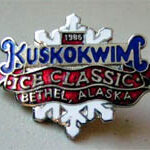 |
Kuskokwim Ice Classic – 1986 | 1986 | 2 x 1 1/4" |
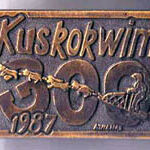 |
Kuskokwim Ice Classic Copper – 1987 | 1987 | 2 x 1 1/4" |
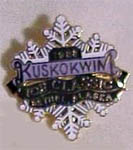 |
Kuskokwim Ice Classic – 1988 | 1988 | 2 x 1 1/4" |
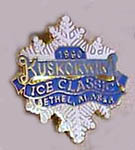 |
Kuskokwim Ice Classic – 1990 | 1990 | 2" |
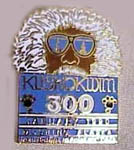 |
Kuskokwim 300 – 1990 | 1990 | 2" |